
Looking Closer: The Hidden Realities of Child Abuse
Updated: Apr 2
The Monthly Mindset - April 2026
By Melanie Pignotti, LCPC, CAC Chief Executive Officer
Every April, Child Abuse Prevention Month calls us to pause and look honestly at what children in our communities are facing. It’s a time to recommit to protecting them, not in theory, but in practice. And that requires us to confront some uncomfortable truths about why abuse happens in the first place.
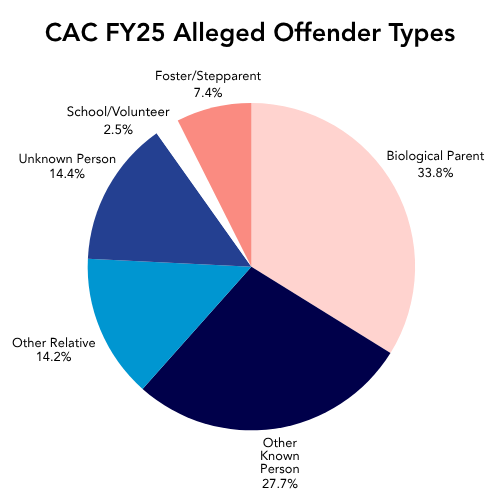
When most people think about child sexual abuse, they imagine a dangerous stranger. But it’s not the reality children are living in. The truth is that most children who experience sexual abuse are harmed by someone they know, someone who has earned their trust, someone who has access, someone the family may even rely on. While women can be perpetrators, the vast majority of offenders are male. That imbalance isn’t about biology; it’s about the way our society teaches boys and men to think about power, emotions and relationships.
In many communities, including our own, children grow up in a culture shaped by patriarchal and gender norms. Its impact shows up in everyday messages: boys are told to be tough, not to cry, not to show vulnerability. Girls are taught to be polite, to avoid conflict, to keep the peace. Children learn early who is allowed to take up space and who is expected to stay quiet. These messages don’t cause abuse on their own, but they create an environment where power imbalances go unchallenged and silence becomes the norm. And silence is exactly where abuse thrives.

Although sexual abuse is often the reason a child is brought to the CAC, it is rarely the only
harm they’ve experienced. Many children arrive carrying more than one type of trauma, what we call polyvictimization, which is far more common than most people realize. These overlapping experiences don’t happen in a vacuum; they are shaped by the same societal norms that teach children to stay silent and adults to overlook early warning signs.

When a culture normalizes power imbalances or discourages speaking up, multiple forms of harm, including sexual abuse, physical abuse, domestic violence, neglect and emotional abuse, can take root long before anyone notices. National data from the National Survey of Children’s Exposure to Violence (NatSCEV) shows that about 22% of children in the United States experience four or more different types of victimization in a single year.
This is why our work cannot focus on a single type of abuse or a single moment in a child’s life. Our multidisciplinary approach allows us to understand the full context of what a child has lived through, not just the incident that brought them to our door. Through forensic interviews, advocacy, medical care and mental health services, we’re able to uncover the layers of a child’s experience with care and intention. We see patterns that might otherwise be missed. We hear the details children may not have felt safe sharing anywhere else. We respond in a way that honors the whole child, not just the presenting allegation.
Prevention must be just as comprehensive. It’s not enough to teach children about body safety if they’re living in homes where basic needs aren’t met or where violence is normalized. Prevention requires us to strengthen families, reduce stressors and build communities where children are surrounded by adults who are attentive, informed and willing to act.
That’s why our CAC focuses our outreach and education efforts where they can make the greatest impact. We train adults in schools, youth programs and community settings to recognize early warning signs and respond when a child needs help. We offer appropriate body safety education to children and families. With every conversation we spark, every adult we equip and every child we empower, we move our community closer to safety and healing.
Prevention is not a slogan; it’s a commitment. Together, we are building the kind of community our vision calls us to create: one where every child can thrive in safety and well‑being. A community where children are safer, families are stronger and silence is no longer an option.

Comments